
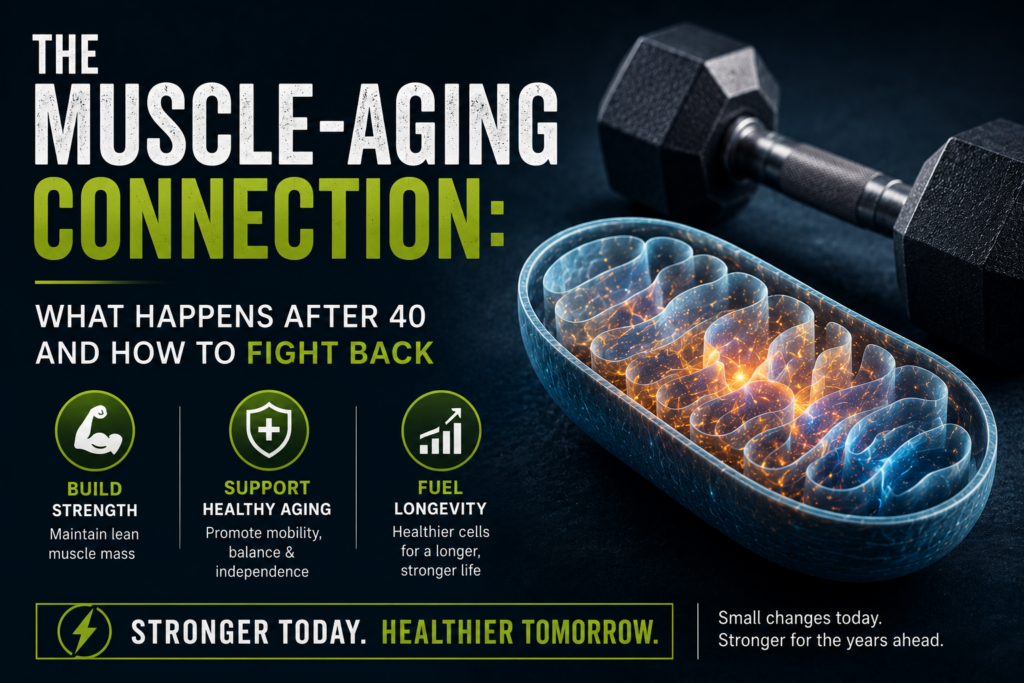
The Muscle-Longevity Connection After 40
When most people think about aging well, they focus on maintaining a healthy weight, supporting heart health, or preserving cognitive function. While all of these are important, one of the strongest predictors of healthy aging is often overlooked: muscle mass.
After age 40, adults naturally begin to lose muscle as part of the aging process. This gradual decline, known as sarcopenia, can affect strength, balance, metabolism, energy levels, and overall quality of life. The good news? With the right nutrition, movement, and wellness support, muscle health can be maintained and even improved well into later decades.
Why Muscle Matters for Longevity
Muscle does much more than help us move. Healthy muscle plays a critical role in:
- Supporting metabolism and blood sugar balance by helping your body effectively use the food you eat for energy.
- Maintaining balance and reducing fall risk by preserving strength, coordination, and stability.
- Protecting bone health because stronger muscles place healthy stress on bones, helping support bone density and reducing fracture risk.
- Supporting mobility and independence so you can continue doing the activities you enjoy and confidently manage everyday tasks as you age.
- Improving recovery and resilience by providing the protein reserves needed to recover from illness, injury, surgery, and physical stress.
- Promoting healthy aging and longevity by supporting the strength, energy, and physical function needed to maintain an active and fulfilling lifestyle.
Research consistently shows that individuals with greater muscle mass and strength tend to experience better health outcomes and maintain independence longer as they age.
The Muscle Loss Challenge After 40
Beginning around age 40, adults may lose approximately 3–8% of muscle mass per decade, with the rate often accelerating after age 60 to 1–2% per year, which can translate to 10–20% per decade. Hormonal changes, sedentary lifestyles, inadequate protein intake, stress, poor sleep, and chronic inflammation can all contribute to muscle loss.
Many people focus solely on weight, but the number on the scale doesn’t tell the whole story. Two people can weigh exactly the same yet have dramatically different amounts of muscle and body fat, leading to very different health outcomes.
As we age, it’s possible to maintain the same weight while gradually losing muscle and gaining body fat—a process sometimes referred to as “normal-weight obesity.” Because muscle plays such an important role in metabolism, mobility, strength, and healthy aging, these changes can impact overall health even when the scale remains unchanged.
For this reason, maintaining or increasing muscle mass is one of the most important investments you can make in your long-term health. Healthy muscle supports strength, energy, balance, recovery, and resilience, helping you stay active, capable, and independent as you age. Rather than focusing solely on weight, consider how well your body supports the activities you enjoy and the lifestyle you want to maintain. These are often the factors that have the greatest influence on quality of life, healthy aging, and longevity.
Building a Longevity-Focused Muscle Strategy
Prioritize Protein
Protein provides the building blocks needed to maintain, repair, and build muscle tissue. As we age, our bodies become less efficient at stimulating muscle growth from dietary protein, making adequate intake even more important after age 40.
Many adults simply do not consume enough protein to support optimal muscle health and healthy aging.
There are three simple approaches you can use to help ensure you’re getting enough protein. One option is to aim for approximately 0.8–1.0 grams of protein per pound of ideal body weight per day. For example, someone with an ideal body weight of 150 pounds may benefit from consuming roughly 120–150 grams of protein daily, depending on their activity level and goals.
If tracking daily protein intake feels overwhelming, another practical approach is to focus on consuming approximately 25–30 grams of protein at each meal. Research suggests that spreading protein throughout the day may help support muscle maintenance and recovery more effectively than consuming most of it in one sitting.
As a simple visual guide, a serving of protein about the size of the palm of your hand typically provides approximately 20–30 grams of protein, depending on the food source. Building your meals around a palm-sized portion of protein can be an easy way to support your daily protein goals without having to measure or track every gram.
High-quality protein sources include:
- Eggs
- Fish
- Poultry
- Lean meats
- Greek yogurt
- Cottage cheese
- Protein shakes
- Legumes and plant-based proteins
Whether you choose to track your total daily protein intake or simply focus on building protein-rich meals, prioritizing protein consistently can help support strength, recovery, healthy aging, and the preservation of lean muscle mass.
Strength Training Is Essential
Resistance training sends the signal to your body that muscle is needed. Activities such as weight training, resistance bands, Pilates, and bodyweight exercises can help preserve strength and support healthy aging.
What Type of Strength Training Is Best After 40?
Not all exercise impacts muscle health in the same way. For healthy aging, a combination of resistance training, balance work, and functional movement provides the greatest long-term benefit.
Traditional Strength Training (2–4 times per week)
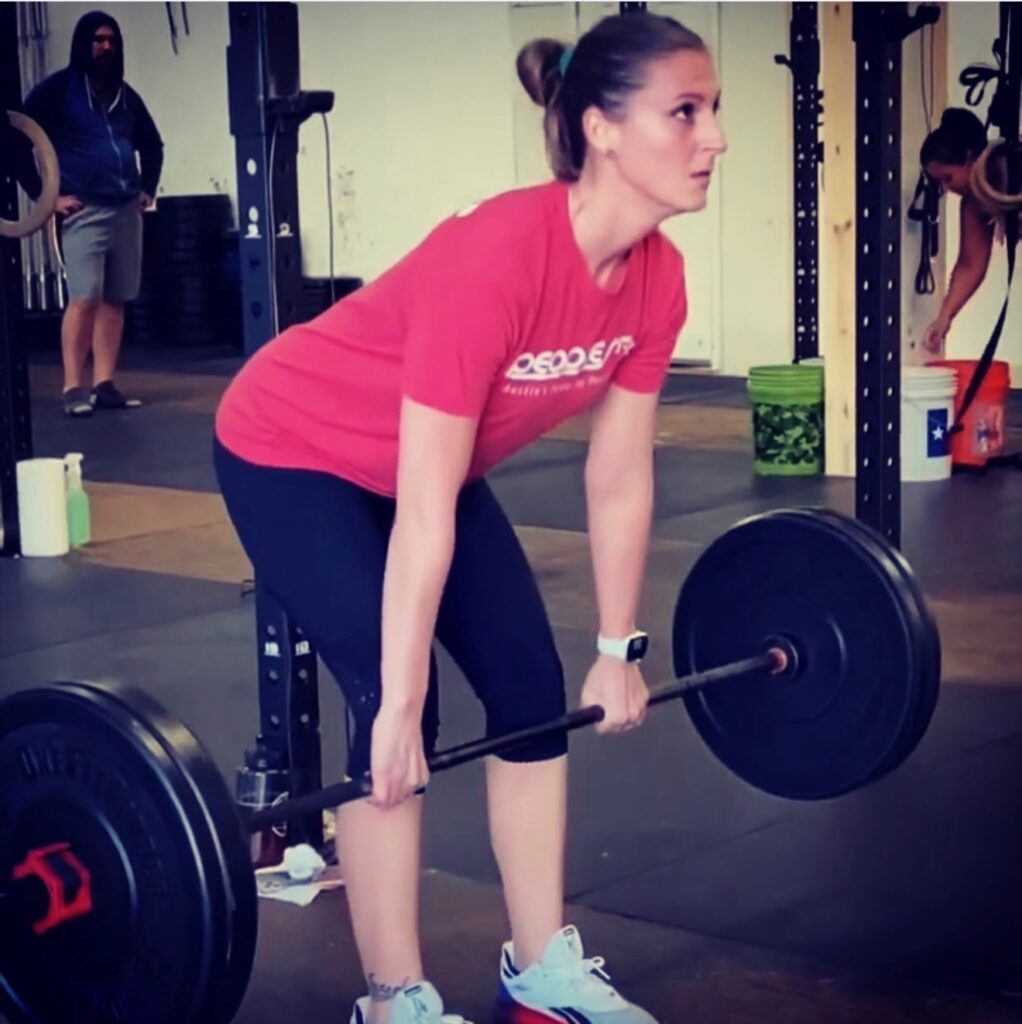
Focus on compound movements that work multiple muscle groups at once, such as squats, deadlifts, lunges, bench press, overhead press, and rows. These foundational exercises help build and maintain muscle mass while supporting strength, bone density, metabolic health, and the functional movement needed for everyday activities.
Free weights, weight machines, kettlebells, and resistance bands can all be effective tools for strength training when used consistently.
For muscle maintenance and healthy aging, choose a weight or resistance level that allows you to complete approximately 8–15 repetitions for 1-3 sets per exercise with good form while feeling challenged by the final few reps. This range is effective for building strength and supporting muscle growth while remaining accessible for most fitness levels.
As your body adapts, gradually increasing the weight, resistance, or difficulty of an exercise—often called progressive overload—helps ensure your muscles continue to be challenged. If you can comfortably perform more than 15 repetitions, it may be time to increase the resistance.
Bodyweight Training (2–3 times per week)
Movements such as squats, lunges, push-ups, planks, step-ups, glute bridges, wall sits, mountain climbers, burpees, dips, and pull-ups help strengthen the muscles used in everyday activities while supporting core stability, balance, joint health and functional fitness.
Because bodyweight training can be easily modified for different fitness levels, it is an excellent option for beginners as well as those looking to supplement a traditional strength-training routine. Regular practice can help improve functional fitness, making everyday movements feel easier and helping you stay active and independent as you age.
Pilates (1–3 times per week)
Pilates is a low-impact form of exercise that focuses on core strength, posture, balance, flexibility, and body awareness. By strengthening the muscles that support the spine and improving movement mechanics, Pilates can help reduce aches and pains, enhance stability, and support better overall movement. It also complements traditional strength training by improving mobility and functional movement patterns that become increasingly important for maintaining independence and preventing injury as we age.
Balance and Stability Training (2–3 times per week)
Simple balance exercises can help reduce fall risk and support mobility, particularly after age 50. Activities such as standing on one leg, heel-to-toe walking, stability ball exercises, yoga, Tai Chi, and balance-focused movements help improve coordination, posture, and body awareness. Regular balance training can enhance confidence in everyday movement and play an important role in maintaining independence as we age.
The goal isn’t necessarily to become a competitive athlete. Rather, it’s to maintain strength, mobility, stability, and confidence in everyday life. Consistency is far more important than intensity, and even a few sessions each week can significantly improve long-term health outcomes.
Support Recovery
Muscle is built during recovery. While exercise provides the stimulus for muscle growth, it is during periods of rest that the body repairs and rebuilds muscle tissue.
Key recovery strategies include:
- Sleep: Aim for 7–9 hours per night to support muscle repair, recovery, and overall health.
- Hydration: Staying well-hydrated helps support muscle function, performance, and recovery. Drink at least half your body weight in ounces of water daily. Add electrolytes to enhance hydration.
- Stress Management: Chronic stress can make it more difficult to build and maintain muscle. Activities such as walking, yoga, meditation, and spending time outdoors can help support a healthy stress response.
- Proper Nutrition: Adequate protein and a nutrient-dense diet provide the building blocks needed for muscle repair and growth.
Remember, exercise is only part of the equation—recovery is where many of the benefits actually happen.
Supplements That May Support Muscle Health and Healthy Aging
At Peoples Rx, we carry a variety of supplements that can help support muscle maintenance, recovery, and overall longevity goals.
Creatine Monohydrate
Creatine is one of the most researched supplements for supporting muscle strength, power, recovery, and healthy aging. Emerging research also suggests benefits for cognitive health, energy production, and maintaining muscle mass as we age.
A typical dose is 5-10 grams daily, taken consistently. While some people choose to begin with a higher “loading phase,” it is not necessary. Most individuals can achieve the same benefits by simply taking 5-10 grams each day. Creatine can be mixed into water, smoothies, or protein shakes and may be taken any time of day.
Top Pick: Orthomolecular Creatine Powder provides pure creatine monohydrate in an easy-to-mix powder, making it a convenient option for supporting muscle strength, recovery, and healthy aging.
Whey or Plant-Based Protein
Protein powders can help bridge nutritional gaps and support muscle maintenance, especially for busy adults who struggle to meet daily protein needs through food alone. When selecting a protein powder, look for products that provide approximately 20–30 grams of protein per serving with minimal added sugars and unnecessary fillers.
Top Picks: Thorne Whey Protein Isolate delivers 21 grams of high-quality protein per serving and is rich in essential amino acids that help support muscle recovery, maintenance, and healthy aging. Its clean ingredient profile and great taste make it an easy addition to smoothies, post-workout shakes, or everyday nutrition.
Top Pick (Plant-Based): CV Sciences Protein + Creatine combines high-quality plant protein with added creatine to support muscle maintenance, recovery, strength, and healthy aging. Each serving provides 25 grams of plant-based protein and 5 grams of creatine monohydrate, making it a convenient way to support both daily protein intake and muscle health in one great-tasting shake.
Magnesium
Magnesium supports muscle function, recovery, sleep quality, and energy production. Many adults do not get adequate amounts from diet alone.
A typical supplemental dose is 200–400 mg daily. Forms such as magnesium glycinate and magnesium malate are often preferred for their excellent absorption and additional benefits for relaxation, recovery, and energy production. Many high-quality supplements also contain a blend of different magnesium forms to provide broader support.
Top Pick: Orthomolecular Reacted Magnesium features a blend of highly absorbable magnesium forms, including glycinate, malate, and citrate, to support muscle function, recovery, relaxation, energy production, and overall wellness. Its comprehensive formula makes it an excellent option for individuals looking to support both active lifestyles and healthy aging.
Omega-3 Fatty Acids
Omega-3s help support healthy inflammation levels, muscle recovery, cardiovascular health, brain function, and healthy aging.
To support overall health, it is recommended to aim for a combined EPA and DHA intake of 2,000-3,000 mg per day, though individual needs may vary. When choosing an omega-3 supplement, look for the amount of EPA and DHA listed on the label rather than the total fish oil amount, as this provides a more accurate measure of the active omega-3 content.
Top Pick: Orthomolecular Products Orthomega 820 delivers a concentrated source of EPA and DHA to support healthy inflammation levels, muscle recovery, cardiovascular health, brain function, and healthy aging. Its high-quality, purified fish oil formula makes it an excellent daily option for individuals looking to support long-term wellness and maintain an active lifestyle.
CoQ10
CoQ10 supports mitochondrial function and cellular energy production, helping maintain energy and resilience as we age. Because muscles require significant amounts of energy to function and recover, CoQ10 may also help support muscle performance, recovery, and overall physical function. Maintaining healthy CoQ10 levels becomes increasingly important with age, as natural production tends to decline over time.
A typical supplemental dose ranges from 100–300 mg daily, depending on individual needs and health goals.
Top Pick: Thorne CoQ10 100 mg provides a highly bioavailable form of CoQ10 to support cellular energy production, mitochondrial health, muscle function, and cardiovascular wellness. It is an excellent option for individuals looking to support energy, recovery, and healthy aging.
Collagen Peptides
While not a complete protein for muscle building, collagen can help support joints, tendons, and connective tissue, as well as mobility, making it easier to stay active. As we age, natural collagen production declines, which may contribute to joint discomfort, reduced flexibility, and changes in skin and connective tissue health.
Supplementing with collagen peptides may help support joint comfort, healthy connective tissue, and overall mobility, allowing you to continue participating in the activities that help preserve muscle and promote healthy aging. A typical dose is 10–20 grams daily, often mixed into coffee, smoothies, or other beverages.
Top Pick: Great Lakes Collagen Peptides provides hydrolyzed collagen peptides that mix easily into hot or cold beverages. It helps support healthy joints, tendons, ligaments, and connective tissue, making it an excellent addition to a longevity-focused wellness routine that supports mobility and an active lifestyle.
Measure More Than Weight
One of the biggest mistakes people make when evaluating their health is relying solely on the number on the scale. Weight alone cannot tell you whether you’re building or maintaining muscle mass, losing body fat, or staying properly hydrated.
Because muscle plays such an important role in strength, mobility, metabolism, and healthy aging, understanding how much muscle you have—and whether you’re gaining or losing it over time—can provide far more meaningful insight than weight alone.
That’s where InBody Body Composition Testing can help.
At Peoples Rx, our InBody assessment provides a detailed look at your body composition, including:
- Skeletal muscle mass
- Body fat percentage
- Visceral fat levels
- Hydration status
- Segmental muscle distribution
- Basal metabolic rate (BMR)
This information helps create a more complete picture of your health and allows you to track meaningful progress beyond weight alone. Whether your goal is healthy aging, improved fitness, better metabolic health, or maintaining independence as you age, understanding your body composition provides valuable insight into where you are today and how your wellness plan is working over time.
For those actively working to build muscle, improve body composition, or support their overall health, repeating an InBody assessment every 4–8 weeks can help track meaningful changes over time. Regular testing provides objective feedback on your progress and helps ensure your nutrition, exercise, and wellness strategies are moving you toward your goals.
Unlike a traditional scale, the InBody test can identify changes in muscle mass, body fat, and hydration status that may otherwise go unnoticed. By monitoring these key metrics, you can gain a deeper understanding of your health and make more informed decisions to support strength, vitality, healthy aging, and longevity.
Takeaway
Healthy aging isn’t just about adding years to life—it’s about adding life to those years. Maintaining muscle after 40 is one of the most powerful investments you can make in your long-term health, mobility, energy, and independence.
Combining regular strength training, adequate protein intake, targeted nutritional support, and periodic InBody body composition testing can help ensure you’re preserving one of your greatest longevity assets—your muscle.
At Peoples Rx, we’re committed to helping you take a personalized approach to wellness through trusted guidance, high-quality supplements, and humanized services like InBody Body Composition Testing that help you better understand your body and your goals. Because when it comes to longevity, strong muscles are one of the best foundations for a vibrant, active future.
Author: Jessica Wilhelm, Director of Wellness, Peoples Wellness and Rx
SHOPPING LIST:
Orthomolecular Creatine Powder
CV Sciences Protein + Creatine
Orthomolecular Reacted Magnesium
Orthomolecular Products Orthomega 820
Products are not intended to diagnose, treat, cure, or prevent any disease. *Check with your healthcare practitioner if you are nursing, pregnant, under 18, or following a doctor-prescribed protocol.