
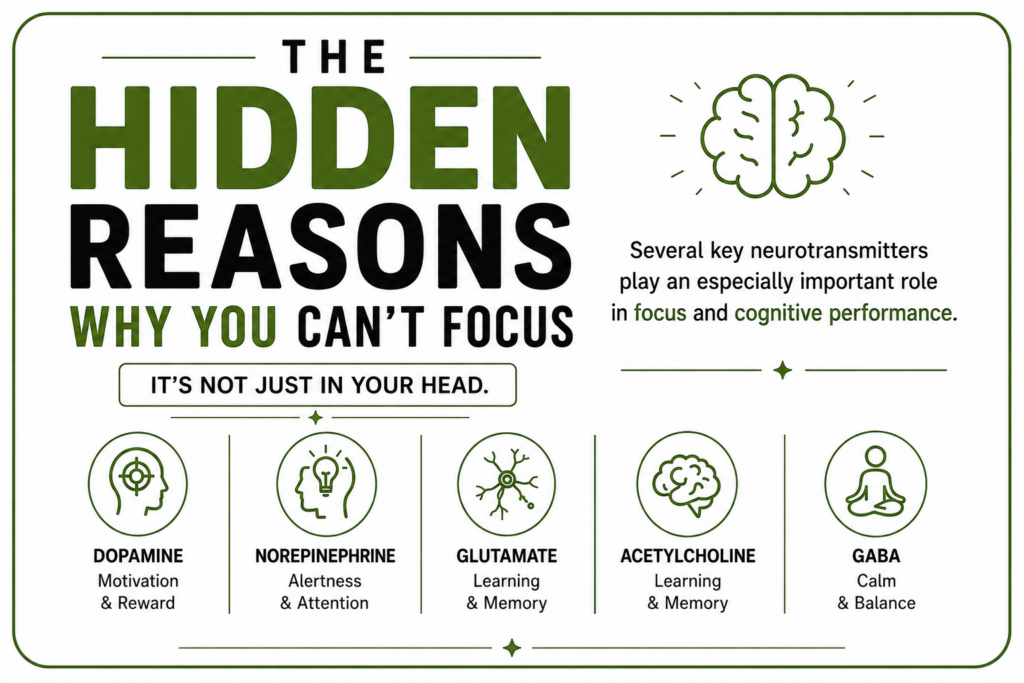
The Hidden Reasons Why You Can’t Focus
How Brain Chemistry, Nutrition, and Gut Health Affect Focus and Attention at Every Age
August marks a fresh start for many of us. Kids are settling into new classrooms, college students are balancing demanding coursework, and adults are transitioning from the slower pace of summer into packed calendars, work deadlines, and family responsibilities. It’s also the time of year when many people begin to notice that being able to focus isn’t as easy as it should be.
Maybe your child is struggling to pay attention and focus in class or complete homework. Perhaps your college student finds it difficult to concentrate during lectures or while studying. Or maybe you’re an adult who constantly jumps between tasks, loses your train of thought, battles brain fog, or has trouble finishing projects.
For individuals who struggle with focus and attention, these challenges may become even more noticeable as academic and work demands increase. Even for those without a diagnosis, symptoms like poor concentration, forgetfulness, mental fatigue, and difficulty staying organized can signal that the brain may not be functioning at its full potential.
While focus challenges can have many causes, healthy attention and concentration rely on much more than willpower. Your brain depends on balanced neurotransmitters, key nutrients like B vitamins and omega-3 fatty acids, a healthy gut, and efficient communication between brain cells.
Let’s explore some of the hidden factors that may be affecting your ability—or your child’s ability—to stay focused and perform at their best.
Does This Sound Familiar?
Difficulty focusing can look different depending on your stage of life.
School-Age Children
- Difficulty paying attention in class
- Easily distracted
- Trouble following directions
- Frequently forgetting assignments
- Difficulty completing homework
- Constant fidgeting or restlessness
College Students
- Trouble concentrating during lectures
- Difficulty studying for long periods
- Brain fog during exams
- Poor memory retention
- Mental fatigue
- Feeling overwhelmed by coursework
Adults
- Constantly switching between tasks
- Difficulty finishing projects
- Forgetting appointments or conversations
- Trouble staying organized
- Brain fog
- Mental fatigue
- Feeling easily distracted at work
While focus and attention challenges can have many different causes, they may be influenced by factors such as neurotransmitter imbalances, nutrient deficiencies, gut dysfunction, chronic stress, inflammation, or poor omega-3 status.
Your Brain’s Focus Chemicals: Neurotransmitters
Neurotransmitters are chemical messengers that allow brain cells to communicate with one another. They influence attention, memory, motivation, mood, learning, a healthy sleep cycle, stress resilience, and mental energy.
When these chemical messengers—or the balance between them—are disrupted, the symptoms can look very different from person to person. One individual may struggle with low motivation and brain fog, while another feels restless, anxious, overstimulated, or unable to quiet their mind. Several key neurotransmitters play an especially important role in focus and cognitive performance.
Dopamine: Motivation, Focus & Drive
Often called the brain’s “motivation molecule,” dopamine helps regulate:
- Focus and sustained attention
- Motivation
- Executive function
- Working memory
- Productivity
- Goal-directed behavior
When dopamine is low, you may notice:
- Difficulty starting tasks
- Procrastination
- Poor concentration
- Low motivation
- Brain fog
- Feeling mentally “flat”
In children, low dopamine may show up as difficulty staying engaged in schoolwork or following through on assignments. In adults, it often appears as procrastination, lack of motivation, and difficulty completing projects. Too much dopamine can contribute to impulsivity, restlessness, and difficulty staying on a single task.
Norepinephrine: Alertness & Mental Energy
Norepinephrine helps keep the brain alert and engaged by supporting:
- Attention
- Mental energy
- Processing speed
- Reaction time
- Cognitive performance
Low levels may contribute to:
- Mental fatigue
- Difficulty concentrating
- Feeling sluggish
- Slow thinking
High levels may contribute to anxiety, feeling “wired,” racing thoughts, and difficulty relaxing.
Glutamate: Learning & Memory
Glutamate is the brain’s primary excitatory neurotransmitter and plays an important role in learning and memory. However, balance is everything. When glutamate remains elevated for long periods, the brain can become overstimulated, contributing to:
- Difficulty concentrating
- Feeling mentally overwhelmed
- Racing thoughts
- Anxiety
- Poor sleep
- Brain fog
Healthy glutamate regulation is essential for sustained attention and clear thinking.
GABA: The Brain’s Brake Pedal
If glutamate is the accelerator, GABA is the brake. GABA helps calm excessive brain activity, making it easier to:
- Stay focused
- Filter distractions
- Relax
- Sleep
- Process information efficiently
Low GABA levels often leave people feeling as though their brain “never shuts off.”
Acetylcholine: The Learning & Memory Messenger
While dopamine and norepinephrine often get the most attention when talking about focus, another important neurotransmitter for brain health is acetylcholine. Acetylcholine is another key player in cognitive health.
Acetylcholine helps the brain:
- Pay attention and stay engaged
- Learn and process new information
- Form and retrieve memories
- Support mental processing and recall
- Maintain overall cognitive function
The body uses choline as a building block to produce acetylcholine. This makes adequate choline intake and healthy acetylcholine activity an important part of supporting focus, learning, and memory—whether you’re sitting in a classroom, studying for an exam, or trying to stay sharp and productive at work.
Supporting Healthy Brain Chemistry
Understanding the role of neurotransmitters is one piece of the puzzle. The next step is making sure the brain has the nutrients and building blocks it needs to produce neurotransmitters, maintain healthy brain cells, and communicate effectively.
This is where targeted nutritional support may be helpful.
⭐ Peoples Wellness Pick: Seeking Health Optimal Focus™ and Kids Optimal Focus™
Optimal Focus™ and Optimal Focus™ for kids provides targeted support for several pathways involved in focus, attention, learning, and memory—with a particular emphasis on supporting healthy acetylcholine activity and brain cell communication.
Key ingredients include:
- Xerenos® Citicoline – Provides choline to support acetylcholine production while also supporting healthy brain cell membranes, mental energy, attention, and memory.
- AlphaSize® Alpha-GPC – A highly bioavailable source of choline that provides building blocks needed to produce acetylcholine, supporting memory, learning, and focus.
- Huperzine – Helps maintain acetylcholine activity by slowing its breakdown, allowing this important neurotransmitter to remain available longer.
- Bacopa – A traditional nootropic herb studied for its ability to support memory, learning, attention, and cognitive performance.
- Uridine – Supports healthy brain cell membranes and neuronal communication and works alongside choline to support pathways involved in cognitive health.
Together, these ingredients take a multi-pathway approach—supporting acetylcholine production and activity while also promoting healthy brain cell membranes and neuronal communication.
Suggested Use: Optimal Focus™ is designed to be used based on individual needs rather than necessarily taken every day. For ages 14 and older, a simplified approach may include 1 capsule daily for 5 days followed by 5 days off, 1 capsule every other day, or 1–2 capsules as needed.
For younger children or those who are more sensitive, Kids Optimal Focus™ allows for more flexible dosing, starting with a smaller amount and gradually adjusting as needed. Always follow product directions and consult your healthcare professional for individualized guidance.
⭐ Peoples Wellness Pick: NBX Full Focus
For individuals looking for broad-spectrum nutritional support for focus and attention, NBX Full Focus is another excellent option. Rather than focusing primarily on acetylcholine, this formula is designed to support multiple neurotransmitter pathways involved in concentration, motivation, mental clarity, and cognitive performance.
NBX Full Focus contains a comprehensive blend of nutrients and botanicals selected to support:
- Healthy dopamine, norepinephrine, and acetylcholine pathways
- Focus and sustained attention
- Executive function and mental clarity
- Learning and memory
- Healthy stress response
- Overall cognitive performance
It works well as a foundational brain-support formula and can often be paired with other targeted supplements based on an individual’s Neuro Focus 2 results and wellness goals.
Suggested Use: Follow label directions or the suggestions of your wellness specialist, as dosing may vary depending on age and individual needs.
⭐ Another Wellness Pick: Host Defense MycoBotanicals® Brain
For a broader approach to supporting brain health, Host Defense MycoBotanicals® Brain combines functional mushrooms and targeted botanicals that work together to support focus, memory, cognitive performance, healthy brain aging, and nervous system function.
Lion’s Mane (Hericium erinaceus) is particularly interesting for brain health. Compounds found in Lion’s Mane have been studied for their potential neuroprotective properties and ability to support pathways involved in nerve growth and neuronal health. Human research is still emerging, but early studies suggest potential benefits for cognitive function.
In one randomized, double-blind, placebo-controlled study, 30 adults ages 50–80 with mild cognitive impairment received Lion’s Mane or placebo for 16 weeks. The Lion’s Mane group showed significantly improved cognitive function scores at weeks 8, 12, and 16 compared with the placebo group. Interestingly, scores declined after supplementation was discontinued, suggesting that consistent use may be important for maintaining benefits.
A more recent small study in healthy young adults also found preliminary evidence that Lion’s Mane may support faster cognitive performance and reduced subjective stress, although larger studies are still needed.
Along with Lion’s Mane, Bacopa supports memory and learning, Ginkgo supports healthy circulation, and Reishi and Cordyceps provide additional support for neurological health, stress resilience, and energy.
Suggested Use: Adults may take 2 capsules once daily. For children, we suggest speaking with one of our wellness specialists or your child’s healthcare provider to determine whether MycoBotanicals® Brain is appropriate and to discuss individualized dosing.
Which Option Is Right for You?
Each of these products supports healthy brain function—but they do so in different ways. The best choice depends on your individual symptoms, goals, and underlying biochemistry.
Choose Seeking Health Optimal Focus™ or Kids Optimal Focus™ if you:
- Want targeted support for attention, learning, and memory
- Are looking to support healthy acetylcholine production and activity
- Need help with mental clarity, focus, and information processing
- Prefer a product that can be used as needed or on a flexible schedule
- Are looking for an option designed specifically for children or teens
Choose NBX Full Focus if you
- Want comprehensive support for multiple neurotransmitter pathways
- Struggle with focus, motivation, mental fatigue, or executive function
- Are looking for a strong foundational formula to support overall cognitive performance
- Want a product that supports dopamine, norepinephrine, acetylcholine, and healthy stress response
- Are using your Neuro Focus 2 results to build a personalized brain health plan
Choose Host Defense MycoBotanicals® Brain if you:
- Prefer a mushroom- and botanical-based approach to brain health
- Want long-term support for memory, cognition, and healthy brain aging
- Are interested in the research behind Lion’s Mane and its role in supporting nerve growth and cognitive function
- Want additional support for stress resilience, neurological health, and energy
B Vitamins: Essential for Healthy Brain Chemistry
Your brain cannot make neurotransmitters without the right nutritional building blocks.
B vitamins serve as essential cofactors in the production and recycling of dopamine, serotonin, GABA, and norepinephrine.
Key nutrients include:
- Vitamin B6
- Vitamin B12
- Folate
- Riboflavin (B2)
- Niacin (B3)
Low levels of these nutrients may contribute to:
- Brain fog
- Poor concentration
- Memory issues
- Low mental energy
- Difficulty handling stress
- Reduced cognitive performance
Even mild deficiencies can impact brain function long before more obvious symptoms develop.
⭐ Peoples Wellness Pick: Orthomolecular Methyl B-Complex
One of our favorite foundational supplements for supporting healthy brain chemistry is Orthomolecular Methyl B-Complex.
This comprehensive formula provides bioactive (methylated) forms of key B vitamins, including methylfolate, methylcobalamin (B12), and pyridoxal-5-phosphate (active B6), which are readily utilized by the body to support neurotransmitter production and healthy methylation.
Orthomolecular Methyl B-Complex helps support:
- Healthy dopamine, serotonin, GABA, and norepinephrine production
- Mental clarity and focus
- Energy production and reduced mental fatigue
- Healthy stress response
- Cognitive function and nervous system health
⭐ An Easy-to-Take Option: Quicksilver Scientific Methyl B-Complex
For younger kids or anyone who has difficulty swallowing capsules, Quicksilver Scientific Methyl B-Complex offers a convenient liquid alternative. Its liposomal delivery system provides bioavailable forms of key B vitamins to support healthy methylation, neurotransmitter production, cellular energy, and nervous system function.
The liquid format makes it an easy option for those who prefer not to swallow capsules and allows for more flexible serving sizes based on individual needs.
Why it matters: B vitamins are required to convert the amino acids you eat into the neurotransmitters your brain relies on every day. Without adequate B vitamins, your brain may struggle to produce the chemical messengers needed for focus, concentration, memory, and mood.
Beyond the Brain: How Gut Health Can Impact Focus
The connection between gut health and brain function is another important piece of the focus puzzle. The digestive system and brain constantly communicate through the gut-brain axis, which means what’s happening in the gut can influence how we think and feel.
As mentioned earlier, elevated histamine on a neurotransmitter test may provide a clue that something deeper is happening in the gut. Food sensitivities, gastrointestinal inflammation, or imbalances in gut flora may contribute to increased histamine and create an ongoing physical stressor for the body.
Food sensitivities may also play a role in focus and cognitive function. When the immune system reacts to certain foods, it can promote inflammatory and histamine-related responses. For some individuals, this may contribute to symptoms that extend well beyond the digestive tract—including brain fog, mental fatigue, difficulty concentrating, mood changes, and feeling less mentally sharp after eating certain foods.
Over time, elevated histamine and ongoing physical stress may also interact with pathways involving dopamine, norepinephrine, and epinephrine, potentially contributing to changes in focus, mood, mental energy, and stress resilience.
But the gut-brain connection goes even further. A healthy digestive system is also essential for:
- Breaking down dietary protein into the amino acids needed to build neurotransmitters
- Absorbing B vitamins and other nutrients required for healthy brain chemistry
- Maintaining a balanced gut microbiome
- Supporting a healthy inflammatory response
When gut health is compromised by dysbiosis, poor digestion, inflammation, food sensitivities, or increased intestinal permeability (“leaky gut”), you may experience symptoms that extend beyond digestion—including brain fog, difficulty concentrating, fatigue, mood changes, and poor mental clarity.
This is why addressing focus and attention sometimes means looking beyond the brain. When elevated histamine, digestive symptoms, suspected food sensitivities, or other signs of gut dysfunction are present, identifying and addressing these underlying factors may be an important part of supporting healthier brain chemistry, clearer thinking, and better cognitive function.
⭐ Peoples Wellness Picks: Supporting the Gut-Brain Connection
Supporting better focus sometimes starts with supporting better digestion. Depending on your individual needs, two foundational options may include:
Digestive Enzymes – Help break down proteins, fats, and carbohydrates so your body can better digest food and access the amino acids and nutrients needed to support healthy neurotransmitter production. This may be especially helpful for those who experience bloating, fullness, or digestive discomfort after meals.
Some comprehensive digestive enzyme formulas like the Enzyme Science Intolerance Formula also contain DPP-IV enzyme activity, which helps break down certain peptides found in gluten and casein (a protein in dairy)—two foods that are commonly associated with food sensitivities. Supporting more complete digestion of these proteins may be helpful for individuals with sensitivities or digestive difficulty; however, these enzymes are not a substitute for avoiding gluten in celiac disease or avoiding known food allergens.
Probiotics – Help support a healthy and diverse gut microbiome, which plays an important role in the gut-brain connection, immune balance, and a healthy inflammatory response. Supporting beneficial gut bacteria may be especially important when dysbiosis or microbiome imbalance is contributing to digestive and cognitive symptoms.
However, not all probiotics are the same—especially when histamine is a concern. Some strains within species such as Lactobacillus casei, Lactobacillus delbrueckii subsp. bulgaricus, and certain Lactobacillus reuteri strains may produce histamine or influence histamine pathways.
On the other hand, certain probiotic species and strains may be more appropriate for individuals concerned about histamine. Bifidobacterium longum, Bifidobacterium breve, Bifidobacterium infantis, and certain Lactobacillus plantarum strains are often considered more histamine-friendly, with some research suggesting potential roles in supporting histamine metabolism, gut barrier health, and a balanced immune response.
Ortho Biotic® is one option we often suggest when histamine is a concern, as its formula avoids some of the probiotic species more commonly associated with histamine production while providing a diverse combination of beneficial bacteria and Saccharomyces boulardii to support microbiome balance, digestive health, and intestinal integrity.
Not sure where to start? Gut health is highly individual. Our wellness specialists can help you choose the right digestive enzyme or probiotic based on your symptoms and individual needs—including concerns around food sensitivities or histamine—or determine whether functional testing may help uncover what’s happening beneath the surface.
Omega-3s: Fuel for Brain Cell Communication
Your brain is nearly 60% fat, and one of its most important structural fats is DHA, an omega-3 fatty acid.
Omega-3s help:
- Maintain healthy brain cell membranes
- Support communication between neurons
- Promote healthy dopamine and serotonin signaling
- Reduce neuroinflammation
- Support learning, memory, and attention
Low omega-3 status has been associated with:
- Poor attention
- Difficulty learning
- Brain fog
- Mood changes
- Reduced cognitive performance
DHA is especially important during childhood and adolescence when the brain is rapidly developing, but maintaining healthy omega-3 levels remains equally important for college students and adults who want to support focus, memory, and mental performance.
⭐ Peoples Wellness Pick: SFI Health Equazen®
One of our favorite omega-3 formulas for supporting focus and attention is SFI Health Equazen®.
Unlike many fish oils, Equazen® contains a clinically researched 9:3:1 balance of EPA, DHA, and GLA specifically formulated to support brain function and cognitive performance.
Clinical studies have shown this unique formula may help support:
- Improved focus and attention
- Learning and information processing
- Working memory
- Reading and academic performance
- Healthy behavior and emotional regulation
In one 12-month clinical study, children with ADHD who supplemented with this omega-3/6 blend experienced significant improvements in attention, and those who combined it with medication showed the greatest overall improvements.
Equazen® is an excellent choice for school-age children, college students, and adults looking to support concentration, mental clarity, and overall brain health. It’s available in easy-to-swallow softgels and fruity-flavored jelly chews, making it easy to find an option that works for both kids and adults.
Why it matters: Healthy omega-3 levels help keep brain cell membranes flexible, allowing neurotransmitters like dopamine, norepinephrine, and serotonin to communicate more efficiently—supporting better focus, learning, and cognitive performance.
Looking Beyond the Symptoms with Functional Testing
(All at-home test kits at Peoples include a review of your results with our wellness experts.)
While nutritional support can play an important role, no two people have exactly the same brain chemistry. Two people can both struggle with focus but have very different underlying patterns—which is why a personalized approach can be so valuable.
Neuro Focus 2 Testing
Our Neuro Focus 2 assessment evaluates several key neurotransmitters involved in focus, attention, mood, motivation, sleep, and stress resilience, including:
- Serotonin
- Dopamine
- Norepinephrine
- Epinephrine
- GABA
- Glutamate
- Histamine
The Neuro Focus + Glycine panel also measures glycine, an amino acid that plays an important role in healthy glutamate regulation, nervous system balance, and sleep. This may be an especially helpful option for individuals who struggle with focus and attention during the day as well as difficulty sleeping at night.
But the real value of testing isn’t simply looking at whether one neurotransmitter is high or low. It’s about understanding the patterns and relationships between them and how those patterns may relate to the symptoms you’re experiencing.
For example, dopamine plays an important role in motivation, attention, and executive function, while serotonin influences mood, cravings, and emotional balance. The relationship between these two neurotransmitters may provide additional insight when someone is experiencing a combination of poor focus, cravings, anxiety, or low mood.
We also look at the balance between the brain’s primary excitatory and calming neurotransmitters. Glutamate acts like the brain’s accelerator, helping with learning and information processing, while GABA acts like the brake, helping quiet excessive brain activity. When these systems are out of balance, you may feel overstimulated, experience racing thoughts, or struggle to filter distractions and concentrate.
Norepinephrine and epinephrine provide another piece of the puzzle. These neurotransmitters are involved in alertness, mental energy, attention, and the stress response. Imbalances may contribute to feeling mentally fatigued and unfocused on one end of the spectrum—or wired, anxious, restless, and overstimulated on the other.
And sometimes, the clues lead us beyond the brain.
Elevated histamine may point toward an underlying physical stressor involving the gut, such as gastrointestinal inflammation, food sensitivities, or an imbalance in gut flora. Histamine also interacts with dopamine pathways, and when histamine remains elevated over time, ongoing physical stress may place additional demands on dopamine, norepinephrine, and epinephrine—potentially contributing to changes in focus, mood, and mental energy. In these cases, dietary changes and improving overall gut health may become an important part of the wellness plan.
The big picture: Difficulty focusing isn’t always about having “too much” or “too little” of a single neurotransmitter. It’s often about how multiple systems are interacting. Neuro Focus 2 testing allows us to look at these patterns together and use that information to help guide a more personalized approach to nutrition, lifestyle, and targeted supplementation—rather than relying on guesswork.
Sometimes the Brain Isn’t the Whole Story
Neurotransmitters are just one piece of the puzzle. When appropriate, additional functional testing can help uncover other contributors to poor focus and brain fog.
Metabolomics Spotlight™
Think of this as a wellness checkup for your cells. The Metabolomics Spotlight™ evaluates:
- B-vitamin status
- Cellular energy production
- Mitochondrial function
- Nutrient metabolism
- Oxidative stress
- Neurotransmitter pathways
Healthy brain function depends on healthy cellular function.
GI Spotlight™
Because the gut and brain are closely connected, evaluating digestive health can uncover issues affecting nutrient absorption, inflammation, and the production of neurotransmitter building blocks.
The GI Spotlight comprehensive stool analysis evaluates digestion, the gut microbiome, intestinal barrier health, inflammation, and immune function.
GenePro+ Nutrigenomics Test
Your genes influence how efficiently your body produces, recycles, and breaks down neurotransmitters. GenePro+ Nutrigenomics helps uncover inherited patterns that may impact brain chemistry, nutrient needs, methylation, and overall cognitive performance, allowing for more personalized nutrition and lifestyle recommendations.
A Personalized Approach to Better Focus
Whether you’re helping your child succeed in school, supporting a college student through a demanding semester, or looking to sharpen your own focus at work, understanding the “why” behind your symptoms is the first step.
Difficulty concentrating is rarely caused by one single issue. For many people, it’s the combination of:
- Neurotransmitter imbalances
- B-vitamin deficiencies
- Poor omega-3 status
- Gut dysfunction
- Chronic stress
- Inflammation
- Reduced cellular energy
By identifying and addressing these underlying factors, you can support healthier brain function, improve mental clarity, and enhance cognitive performance over time.
Rather than simply masking symptoms, functional testing provides valuable insights into your unique biochemistry, allowing us to create a personalized wellness plan designed specifically for you.
Ready to Take the Next Step?
If you or someone in your family has been struggling with focus, attention, memory, brain fog, or mental fatigue, our wellness specialists are here to help. We will work with you or your loved ones to determine whether the Neuro Focus, Metabolomics Spotlight™, GI Spotlight™, or GenePro+ Nutrigenomics at-home test kits may be appropriate based on your symptoms and goals. From there, we’ll help you build a personalized nutrition and supplement plan to support healthy brain function, so you can thrive in the classroom, at work, and in everyday life. Stop by any Peoples Wellness location or speak with one of our wellness specialists to discover what’s really behind your focus challenges and start supporting your brain from the inside out.
All at-home test kits at Peoples include a review of your results with our wellness experts.
Products are not intended to diagnose, treat, cure, or prevent any disease. *Check with your healthcare practitioner if you are nursing, pregnant, under 18, or following a doctor-prescribed protocol.