
Anxiety and poor sleep are two of the most common health concerns in the US, and they are deeply connected. Sleep quality is one of the most common concerns our wellness experts hear from our customers. Many people experience symptoms such as lying awake at night with racing thoughts, worrying about tomorrow, sleep interruptions at night, and only to wake up feeling exhausted despite getting enough sleep
The relationship between anxiety and sleep creates a cycle that can be difficult to break. Anxiety can make it harder to fall asleep and stay asleep, while poor sleep can increase feelings of stress, worry, irritability, and anxious thoughts. Understanding this connection is one of the first steps toward improving overall wellness.
Anxiety disorders affect approximately 19% of U.S. adults each year, making them among the most common mental health conditions in the country. Additionally, nearly one-third of adults will experience an anxiety disorder at some point in their lives.
Sleep challenges are just as common. According to the CDC, approximately 30–36% of U.S. adults do not get the recommended seven hours of sleep per night. In 2024, 15.4% of adults reported trouble falling asleep, and 18.1% reported trouble staying asleep. These numbers suggest that millions of Americans are struggling with two issues that often go hand in hand.
The Anxiety-Sleep Connection
When the body perceives stress, it activates the nervous system and releases stress hormones such as cortisol and adrenaline. While these hormones are helpful in emergency situations, they can interfere with the body’s natural ability to relax and transition into restful sleep.
Common signs of anxiety-related sleep disruption include:
- Racing thoughts at bedtime
- Difficulty falling asleep
- Waking during the night
- Early morning waking
- Feeling tired despite adequate sleep
- Increased stress and irritability throughout the day
Unfortunately, the cycle often continues. Poor sleep can make it harder to regulate emotions, increasing feelings of anxiety and stress the next day. The result can become a repeating pattern of poor sleep and heightened anxiety. The CDC notes that insufficient sleep is associated with increased risk of anxiety and depression.
Real-Life Examples
The Busy Professional: A 45-year-old executive experiences constant work-related stress. As responsibilities increase, she begins checking emails late into the evening and has difficulty “turning off” her mind at night. Sleep becomes fragmented, leading to fatigue, irritability, and increased anxiety during the day.
The Caregiver: A 58-year-old caregiver balances work, family obligations, and caring for an aging parent. Constant worry leads to frequent nighttime awakenings and difficulty falling back asleep. Over time, poor sleep contributes to low energy, increased stress, and difficulty coping with daily demands.
While each situation is different, these examples reflect common patterns that we see every day.
Supplement Recommendations for Anxiety and Sleep Support
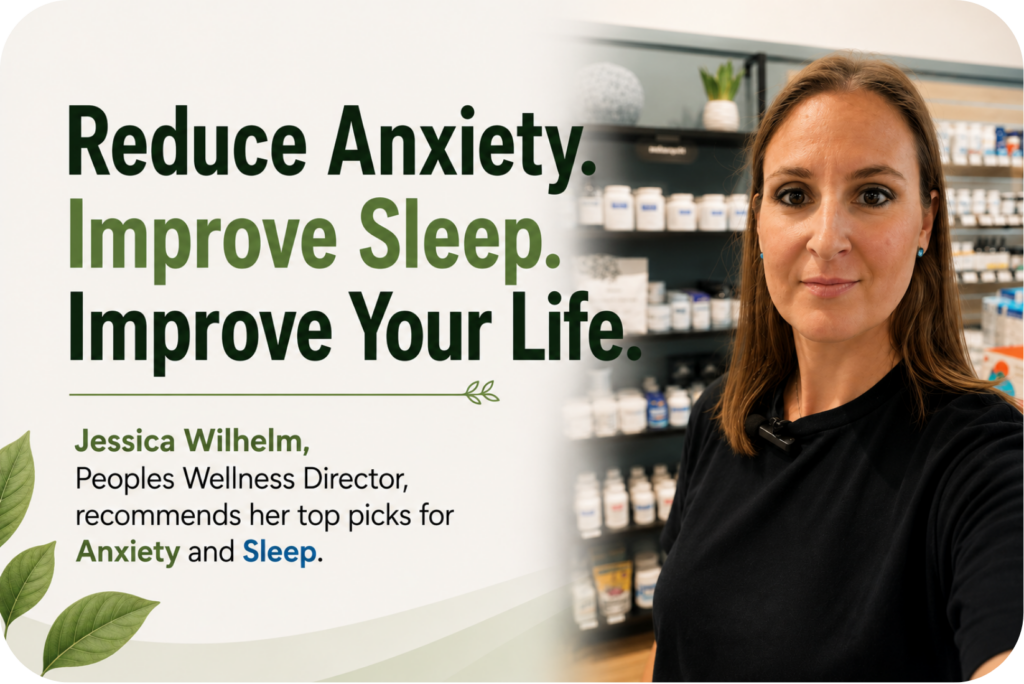
(Click image or here to watch video.)
In addition to Jessica’s top picks of RelaxMax and Liposomal GABA w/L-Theanine, Peoples carries a variety of supplements that may help sleep support and relaxation, anxiety and stress management, and healthy sleep cycles. Come in and speak to our wellness experts to choose the right solutions for you.
Magnesium Glycinate: One of the most popular supplements for relaxation and sleep support. Magnesium helps support nervous system function, muscle relaxation, and healthy sleep quality.
L-Theanine: An amino acid found naturally in green tea that promotes calm focus and relaxation without causing drowsiness.
Melatonin: May help support healthy sleep-wake cycles, particularly during travel, schedule changes, or occasional sleep disruptions.
Adaptogenic Herbs: Adaptogens such as ashwagandha and rhodiola may help support the body’s response to stress and promote resilience.
Neuro Mag® (Magnesium L-Threonate): A specialized form of magnesium that supports cognitive health, relaxation, and overall brain wellness.
Cortisol Support Formulas: Targeted supplements designed to help support healthy cortisol levels and stress response throughout the day.
Supporting Better Sleep and Reduced Anxiety
Improving sleep and reducing anxiety often requires a comprehensive approach that addresses lifestyle, nutrition, stress management, and underlying health factors.
Simple habits can have a significant impact:
- Maintain a consistent sleep schedule
- Limit screen exposure before bed
- Create a cool, dark sleep environment
- Reduce caffeine later in the day
- Incorporate relaxation techniques before bedtime
Support the Nervous System: Regular movement, mindfulness practices, deep-breathing exercises, and time spent outdoors can help regulate the body’s stress response and promote relaxation.
Evaluate Underlying Factors: Hormone imbalances, elevated cortisol levels, nutrient deficiencies, blood sugar fluctuations, and chronic stress can all contribute to anxiety and poor sleep.
You can improve sleep quality and reduce stress with the wellness resources at Peoples
Anxiety and sleep are closely connected, and improving one often helps improve the other. By addressing lifestyle factors, supporting the nervous system, and gaining a better understanding of your body’s unique needs, you can improve sleep quality, reduce stress, and enhance overall wellness.
At Peoples, our goal is to make wellness more accessible through trusted guidance, personalized support, at-home testing, InBody scans, and high-quality supplements that help you take proactive steps toward feeling your best—day and night. Visit a Peoples location near you.
Products are not intended to diagnose, treat, cure, or prevent any disease. *Check with your healthcare practitioner if you are nursing, pregnant, under 18, or following a doctor-prescribed protocol.